

Company / Blog
IP Effectiveness Conference 2026
The answer to the question we were asked repeatedly at the IPA Effectiveness Conference.
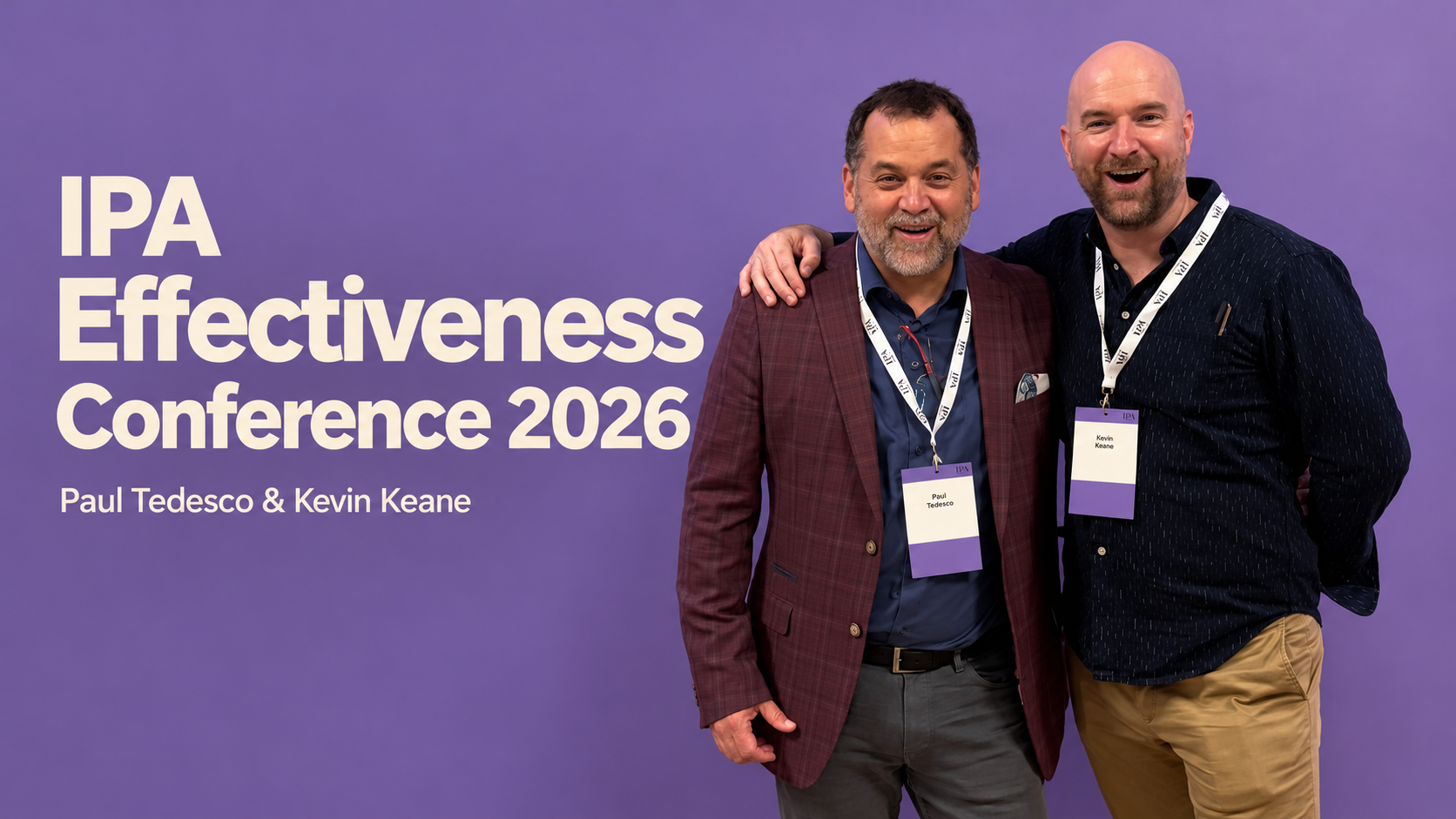 Thank you to those who managed to attend our session and played our game of “rate the ads and politicians”.
I suspect you weren’t quite expecting a cold open asking you to present an emoji face card about Donald Trump, Hilary Clinton and Nigel Farage (not to mention Jaguar and McDonalds).
But such is our challenge today - in politics and life - of accurately recording emotional response and understanding its impact on market (and civic) behaviour.
We all seem to agree on the importance of creativity in business, and the importance of emotion in creativity.
But what of emotion measurement?
To this end, one of the questions that came up multiple times in our sessions was whether our method was a challenge to System 1’s method, which measures emotional responses to ads.
I’m here to say: It is.
Our brief interactive presentations were a tongue-in-cheek lens into how Brainsights differs from other emotional measurement approaches, but I thought it might be useful to share context as to how we arrived here.
Brainsights was born - and grew up - in Toronto Canada. We’re thirteen years old.
13 years ago, Toronto was ridiculously multicultural. Back then, half the people who lived in the city weren’t born here.
It’s even more so now.
And the prevailing spirit of the city is that those who come here bring and practice their culture and share in others. As every Canadian learned growing up, our country’s a mosaic not a melting pot. I heard someone say this week that “We celebrate Home and Heritage”.
Given this context, Brainsights eschewed facial coding from its inception.
Why?
We just didn’t believe it was going to work for what we needed to do, and what we needed to do was find mechanisms and measures that would reliably evaluate emotional expression (and other cognitive measures) their intensity, and do so confidently across cultures and contexts.
We continue to believe this today, and the examples presented at the IPA conference only scratch the surface of why we believe this - and why it matters.
There’s no question that facial coding - or raising an emoji card like we had participants in our session do - would have been easier to do as opposed to recording brain waves.
Every consumer device has a camera, after all.
But, based on our understanding of facial coding technology and the emotion theory underpinning it, it also wouldn’t have respected the multicultural, inclusive and effective measurement we wanted to build and which we think is better suited to our operational environment.
I share this because I think context and background matter. What may be perfectly sensible in one environment - or at one point in time - may be completely unsuitable - and in ways, counterproductive - in another.
At the conference, everyone agreed that Emotion is fundamental to Creativity, and that Creativity was fundamental to business Growth.
It stands to reason then that we should be exploring emerging emotion science and finding a space for it in our marketing measurement toolkits.
Good on the IPA for recognizing this and giving us an opportunity to share.